
By Brett Chapman President, Cascadia Global Ventures
My career has been defined by the intersection of high-velocity sales and executive strategy. From orchestrating massive enterprise deals at Oracle and VMware to adapting to the rapid-fire demands of the startup world, I’ve seen a consistent pattern emerge across sectors like AI Cloud Infrastructure, DevSecOps, Edge Computing, and Zero Trust.
Whether you are scaling Generative AI models or securing distributed edge networks, the “builder” mindset is non-negotiable. But I’ve found that even the most talented builders struggle when their toolkit doesn’t match their blueprints.
Consider this stark reality: The average tenure of a CRO or VP of Sales is just 18 months.
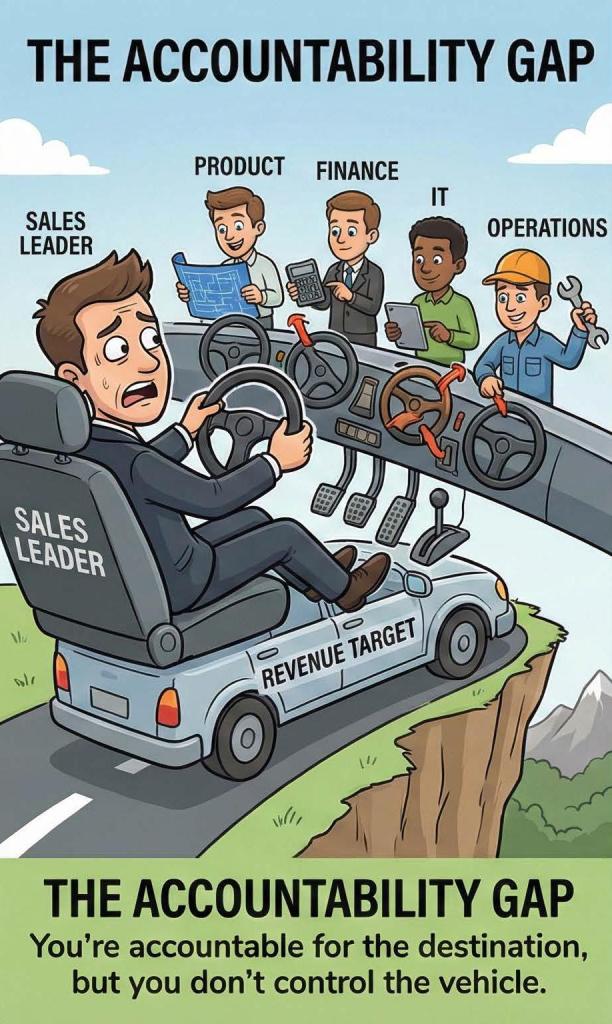
This turnover isn’t because sales leaders suddenly lose their touch. It happens because the role is structurally designed for friction. You are the ultimate owner of the revenue result, yet you often lack authority over the vital operational inputs Product, Finance, IT, and Operations that manufacture that result.
You’re running a sprint, but your support infrastructure is jogging on a different track entirely.
The Authority Deficit
As revenue leaders, our KPIs are binary: Growth, Win Rates, Quota Attainment, and Velocity. We hit them, or we leave.
But without a comprehensive CRO mandate or a strategic RevOps partner, you are operating with an Authority Deficit. You are financially tethered to variables that sit squarely outside your jurisdiction:
- Product: Roadmap adherence and feature timing.
- Finance: Pricing elasticity and margin goals.
- IT: Systems efficacy and tool adoption.
- Customer Success: Renewal rates and upsell mechanics.
When this operational chain fractures, the damage appears on your dashboard, not theirs.
- A delayed product launch pushes three enterprise deals into next quarter.
- Inflexible pricing models cause you to lose head-to-head competitive bids.
- A poorly scoped CRM rollout blinds your forecasting ability.
In this environment, you aren’t leading a strategy; you are managing a crisis. Worse, you find yourself in board meetings justifying missed targets with explanations that sound like “complaints” to investors who only speak the language of ROI.
The Root Cause: Departmental Fragmentation
Most organizations build their Commercial functions in isolation. Marketing, Sales, CS, Product, and Finance all maximize their own metrics.
- Marketing celebrates hitting lead volume targets, even if quality is low.
- Product celebrates shipping on schedule, even if market alignment is weak.
- Sales takes the heat for the missed revenue target.
Because these interdependencies are rarely codified or monitored, revenue leaders often can’t see the structural cracks until the quarter is already lost. The true bottlenecks remain invisible, and you are left responsible for the shortfall.
The Fix: Secure Your Commercial Mandate
Refuse to accept a broken equation. You must engineer a functional one. At Cascadia Global Ventures, I guide leaders through a three-phase process to bridge this gap.
Phase 1: Audit the Revenue Ecosystem
Look beyond the sales floor. You must assess the drivers across your entire commercial landscape:
- What exact caliber of leads must Marketing commit to for your math to work?
- What specific uptime and tool performance must IT guarantee?
- What expansion threshold is CS responsible for contributing?
The Move: Map the full commercial ecosystem. Create a dependency chart that links every cross-functional requirement to a closed deal. This eliminates ambiguity and exposes the actual mechanical failures behind missed revenue.
Phase 2: Classify Your Control Points
Not all drivers are within your reach. You must audit your dependencies based on your ability to direct them:
- Owned: Variables you dictate.
- Influenced: Variables you can sway.
- Dependent: Critical inputs owned by others.
For the “Dependent” category, establish Service Level Agreements (SLAs) rather than vague requests.
- Old Way: “We need IT to support the new tool better.”
- New Way: “IT must certify system readiness 10 days post-launch with zero disruption to sales uptime.”
This converts subjective friction into objective performance management.
Phase 3: Unify Leadership Accountability
This is the pivot point. Present your dependency map to your CEO.
This is not about shifting blame; it is about structural alignment. CEO’s despise mediating inter-departmental squabbles. By presenting a data-driven view of what is required to win, you prove that revenue is an organizational output, not just a sales department metric.
The Objective: You want executive consensus on the revenue formula. You need either expanded jurisdiction over the critical levers or formal accountability protocols that bind other departments to the revenue number.
Fast-Tracking the Solution
You don’t need to invent this methodology from the ground up.
At Cascadia Global Ventures, I utilize the Revenue Velocity Accelerator to expedite this alignment. This proprietary diagnostic scans your business against 35 distinct performance indicators that govern commercial execution analyzing every contributor from Finance and IT to Sales and Product.
Rather than relying on gut feeling, I provide you with undeniable data and market benchmarks that pinpoint exactly where your revenue engine is misfiring. This transforms the conversation from a debate over opinions to a strategic decision based on evidence, arming you with the business case needed to secure the authority you deserve.
Stop absorbing the risk. Start commanding the system.
For a direct consultation on how to fix your Authority Deficit, contact me today.
Brett Chapman Owner, Cascadia Global Ventures Email: brett@cascadiaglobalventures.com Website: https://cascadiaglobalventures.com
 Cascadia Global Ventures
Leave a comment